

Can’t Find a Remote Job? 7 Realistic Ways to Start Earning Online in South Africa
Being rejected, ignored or repeatedly told that a remote position has already been filled does not mean that earning online is impossible. A remote job is only one digital-income path. You may be able to start by selling a small service, teaching a skill or helping a real customer solve a practical problem.
No easy-money promises. No guaranteed income. Just practical options that can be tested with limited resources.
Looking for remote work can become emotionally and financially exhausting. You prepare a CV, update LinkedIn, complete application forms, write cover letters and wait. Sometimes there is no response. Sometimes hundreds of applicants are competing for the same position. Sometimes the job closes before your application is even considered.
This frustration takes place within a difficult labour market. Statistics South Africa reported an official unemployment rate of 32.7% in the first quarter of 2026. That does not mean that every unemployed person must become an online entrepreneur. It does, however, explain why relying on one employer to provide an opportunity can feel increasingly uncertain.
The answer is not to stop applying for suitable remote jobs. The answer may be to build a second pathway at the same time: creating a small source of income that does not depend entirely on an employer selecting you.
A remote job gives you income through employment. Digital self-employment gives you income by helping customers, completing projects, teaching skills or selling useful products. Both can be legitimate. They simply use different routes to reach the first payment.
A remote job and online income are not the same thing
“Working online” is often treated as though it means only one thing: finding a permanent remote job. In practice, people earn through the internet in several different ways.
Remote employment
You apply for a defined position and an employer decides whether to hire you.
- You normally receive an agreed salary or wage.
- The employer determines the job responsibilities.
- You compete with other applicants.
- The employer controls the hiring decision.
- Income may be more predictable after appointment.
Self-generated digital income
You identify a useful result and offer to provide it to customers.
- You may charge per task, project, lesson or month.
- You decide what service or product to offer.
- You must find and convince customers.
- You control how many offers you test.
- Income may be irregular, especially at the beginning.
Neither path is automatically easy. A remote job requires applications, interviews and employer approval. Self-employment requires selling, delivery, customer service and persistence.
The advantage of the second path is that you do not need to wait for one company to approve your entire future. You can start by asking one potential customer to buy one clearly defined result.
Important: When money is urgently needed, begin with a service that can be delivered using skills and equipment you already have. Blogging, affiliate marketing, advertising income and large online stores normally take longer to produce reliable income.
7 realistic ways to start earning online in South Africa
These options are not ranked according to glamour or social-media popularity. They are ranked according to whether an ordinary beginner could test them without first building a large audience, buying expensive stock or investing heavily in advertising.
Sell a simple service directly
Turn an existing skill into one small, understandable customer result.
For many beginners, this is the most practical route to a first online payment. You do not need a complicated business plan, expensive website or impressive company profile. You need a useful service that a specific person or business can understand.
Start with something narrow. “I provide digital solutions” is vague. “I will format your CV and produce a professional PDF version” is clear.
Possible services
- CV formatting
- Proofreading
- Document typing
- Spreadsheet cleaning
- Canva graphics
- Presentation design
- Basic online research
- Product-description writing
Possible customers
- Job seekers
- Students
- Local tradespeople
- Community organisations
- Small retailers
- Property practitioners
- Coaches and tutors
- Home-based businesses
“I will professionally format your existing CV, correct basic layout problems and supply it as a Word document and PDF for R350.”
Reality check: The first challenge is not doing the work. It is finding someone who needs the result now. Start with people, businesses and community networks you can reach directly.
Complete freelance projects
Apply for defined assignments instead of permanent jobs.
Freelancing still involves competition, but the buying decision is different from a normal job application. A customer may need help with one document, one website, one research assignment or ten social-media posts. They are purchasing a result rather than filling a permanent position.
Freelance marketplaces can help you reach international customers, but they are not automatic income machines. New profiles often have no ratings, no completed projects and no proof. This makes a small portfolio essential.
Project categories
- Virtual assistance
- Writing and editing
- WordPress updates
- Graphic design
- Video editing
- Transcription
- Data capturing
- Customer support
Before applying
- Create two or three samples.
- Describe the result, not only the skill.
- Use a professional profile photograph.
- Apply only for suitable assignments.
- Read the full project description.
- Never pay to unlock supposed earnings.
“I help small online stores upload and organise product information, including titles, descriptions, prices, categories and images.”
Reality check: Sending dozens of generic proposals is rarely a strong strategy. A carefully matched proposal with a relevant sample is more credible than a copied message sent to every listing.
Teach, tutor or coach online
Package something you know into a paid lesson or support session.
You do not always need to invent a new skill. You may already know something that another person wants to learn. Lessons can be delivered using Zoom, Google Meet or even WhatsApp video, depending on the subject and the customer.
Teaching is not limited to school subjects. People need help using software, preparing for interviews, practising a language, understanding bookkeeping or learning a hobby.
What could you teach?
- English or Afrikaans conversation
- School mathematics
- Music
- Microsoft Word or Excel
- Basic bookkeeping
- Canva
- Interview preparation
- A practical hobby or craft
How to package it
- A once-off assessment
- A one-hour lesson
- A four-lesson starter package
- A monthly support package
- A small group class
- A lesson plus worksheet
“Four one-hour beginner Excel lessons delivered online, including practice exercises and email support between lessons.”
Reality check: Qualifications may be required for certain professional or regulated fields. Do not claim expertise you do not have. Teach within your genuine knowledge and experience.
Help local businesses operate online
Find customers locally and deliver the work digitally.
“Earning online” does not mean that your customer must live in another country. A plumber, guest house, takeaway, garden service, salon, mechanic or small retailer in your town may need practical digital help.
This approach can reduce international competition. You understand the local market, language, prices and customer expectations. You may also be able to meet the business owner before doing the work online.
Services for local businesses
- WhatsApp Business setup
- Digital product catalogues
- Google Business Profile updates
- Menus and price lists
- Online enquiry forms
- Social-media graphics
- Customer spreadsheet organisation
- Website content updates
Where to find customers
- Your existing contacts
- Local Facebook groups
- Business networking groups
- Community organisations
- Local shopping areas
- Suppliers you already know
- Referral partners
- WhatsApp introductions
“I will set up your WhatsApp Business profile, add your business details and load up to 15 products or services into your catalogue.”
Reality check: Do not promise that a Facebook page, website or Google profile will automatically produce sales. Sell the setup and support you can control, not results you cannot guarantee.
Create a useful digital product
Turn repeatable knowledge or work into something customers can download.
A digital product is created once and can potentially be sold more than once. Examples include templates, worksheets, guides, checklists and calculators.
This sounds attractive, but it is usually slower than selling a service. Creating the file is only one part of the business. You still need to identify a real problem, communicate the value, reach customers and earn their trust.
Digital-product examples
- CV templates
- Budget spreadsheets
- Business checklists
- Lesson plans
- Social-media templates
- Printable planners
- Pricing calculators
- Short practical guides
Validate before building
- Speak to possible buyers.
- Identify a repeated problem.
- Create a small first version.
- Show a preview or sample.
- Ask for feedback.
- Improve after real use.
A simple monthly cash-flow spreadsheet for a home-based business, supplied with instructions and a completed example.
Reality check: Do not spend three months producing a large course or eBook before discovering whether customers want it. Build a useful minimum version and test demand first.
Sell or resell physical products online
Use digital channels to reach customers for real-world products.
An income activity can be enabled by the internet without being fully digital. A person can promote and sell handmade products, second-hand goods, food products, plants, crafts or personalised items through online channels.
You may begin with WhatsApp, Facebook Marketplace or local community groups before investing in a complete online store. The simplest system is often the best starting point.
Possible products
- Second-hand household items
- Handmade products
- Seedlings and plants
- Personalised gifts
- Baked products
- Local speciality products
- Craft supplies
- Small bundled product packs
Costs to calculate
- Product or material cost
- Packaging
- Payment fees
- Delivery or collection
- Damaged or returned goods
- Advertising
- Your labour
- Unsold stock
Advertise five made-to-order products using clear photographs and collect confirmed orders before buying materials for a large batch.
Reality check: Revenue is not profit. Calculate the full cost of producing, packaging, marketing and delivering each saleable item.
Build a one-person micro-agency
Convert a once-off service into recurring monthly support.
A micro-agency does not need employees, an office or a complicated brand. It can begin as one person providing one repeatable service to a small number of customers.
The aim is to move away from constantly searching for the next tiny task. Instead, you help the same customers every week or month.
Recurring services
- Monthly bookkeeping support
- Weekly social-media graphics
- Website maintenance
- Product uploads
- Email administration
- Appointment scheduling
- Content repurposing
- Customer database updates
What customers are buying
- Consistency
- Saved time
- Fewer unfinished tasks
- Reliable communication
- Organised information
- A predictable monthly service
“I will create and schedule eight branded social-media posts per month, using information and photographs supplied by your business.”
Reality check: Do not begin by calling yourself a full-service agency. Begin with one service you can deliver reliably. Expand only after the system works.
Which online-income options may pay fastest?
No ethical person can guarantee how quickly you will earn. Results depend on your skills, offer, pricing, network, effort, credibility and customer demand.
However, some models generally require fewer steps before a customer can pay you.
A small service
You can approach a potential customer directly and offer to complete a defined task.
Freelancing or tutoring
You may need a profile, sample, lesson structure or platform approval before winning work.
Products and audiences
Digital products, content sites and affiliate income normally require customer discovery and ongoing marketing.
| Income path | What you need first | Main challenge | Good emergency option? |
|---|---|---|---|
| Simple direct service | A usable skill and one potential customer | Getting the first person to say yes | Potentially, if the skill already exists |
| Freelance projects | Profile, samples and proposals | Competition and lack of reviews | Possible, but not guaranteed |
| Online tutoring | Subject knowledge and lesson structure | Finding suitable students | Possible for qualified or experienced tutors |
| Local digital support | A clear business service | Direct outreach and sales conversations | Often practical |
| Digital products | A proven problem and useful product | Visibility and customer trust | Usually not the fastest |
| Physical products online | A product, supplier or production ability | Stock, delivery and working capital | Only when costs are controlled |
| Micro-agency | A repeatable service and first customer | Consistent monthly delivery | Better as a growth path |
How to choose the right digital-income path
Do not choose an income model simply because someone on social media claims it is profitable. Start with your actual situation.
Ask yourself five practical questions
- What can I already do well enough to help someone? Do not ignore ordinary skills such as typing, organising, explaining, researching, formatting or following up.
- Who can I reach without paying for advertising? Consider former colleagues, community contacts, local businesses, family networks, associations and online groups.
- What problem can I solve within a few days? A small, quick result is easier to sell and test than a complicated long-term transformation.
- What equipment do I already have? A computer, smartphone, internet connection, quiet room, software knowledge or transport may influence your choice.
- Can I show a sample? Customers are more likely to understand an example than a long explanation of your abilities.
You can explore these choices in more detail in How to Choose Your First Digital Income Path in South Africa .
A seven-day first-income experiment
The goal of this experiment is not to build a perfect business in one week. The goal is to collect evidence. Does a real person understand your offer? Does anyone respond? What objections do they raise? Will someone pay for the result?
List your usable skills
Write down practical things you can do now. Include work experience, software knowledge, hobbies, language skills and administrative abilities.
Choose one customer problem
Select a problem that is specific, visible and small enough to solve within a few hours or days.
Create one clear offer
State exactly what you will deliver, what information the customer must supply, how long it will take and what the starting price is.
Produce a sample
Create a mock CV, sample graphic, short lesson outline, spreadsheet, product listing or before-and-after example.
Identify ten suitable prospects
Choose people or businesses that could genuinely need the service. Avoid sending generic spam to strangers.
Make personal contact
Send a short, respectful message explaining the problem you noticed, the help you offer and the next simple step.
Review the evidence
Record responses, questions, objections and interest. Improve the offer before deciding that the entire idea has failed.
This approach follows a simple principle: build proof before you build big . A response, enquiry, meeting, trial order or small payment is more valuable than weeks spent designing a business nobody has tested.
Desperation makes online-income scams more dangerous
People who urgently need money are attractive targets for scammers. The offer is usually designed to remove normal caution: easy work, immediate earnings, flexible hours and little or no experience required.
“Task scams” may ask you to like videos, rate products, complete optimisation activities or boost listings. A fake platform shows earnings increasing. The victim is then told to deposit money, often using cryptocurrency, before the supposed earnings can be released.
Walk away when an opportunity:
- Requires payment before you can start working
- Requires a deposit to release your earnings
- Promises unusually high income for very little effort
- Contacts you unexpectedly through WhatsApp or Telegram
- Uses terms such as product boosting or optimisation tasks
- Pressures you to act before checking the company
- Requests banking details before a genuine hiring process
- Asks you to receive, repackage or forward suspicious goods
A legitimate customer may ask you to purchase ordinary tools or software required to run your own business. That is different from someone demanding that you transfer money to unlock a job, task or withdrawal.
The safest rule is simple: never pay someone for the right to receive supposed earnings.
Keep records from the first rand
A small online-income activity should still be treated seriously. Keep records of:
- Customer payments received
- Invoices or receipts issued
- Platform and payment-processing fees
- Software subscriptions
- Advertising costs
- Materials and packaging
- Business-related internet or communication costs
- Refunds and cancelled orders
South African tax note
SARS states that income from business activities and profits from a trade may form part of taxable income. Your obligations depend on your total income, business structure and personal circumstances.
Keep proper records and consult current SARS guidance or a qualified South African tax practitioner when necessary.
Do not try to build all seven income streams
Reading a list like this can create a new form of overwhelm. A person starts designing templates, opening freelancer profiles, researching tutoring platforms, building a store and planning a YouTube channel—all at the same time.
That usually produces activity without evidence.
Choose one starting path. Create one offer. Show it to real people. Deliver it properly. Then decide what deserves further time.
Your first offer does not have to become your lifelong business. Its purpose is to help you learn:
- Which customers respond
- What they are willing to pay for
- Which parts of the work you can deliver well
- How long the work really takes
- What must change before you repeat the offer
Choose a path you can test—not a dream you must finance
The Digital Income South Africa hub is built around a practical progression: choose a direction, create a small offer, test it with real customers and build on what produces evidence.
Practical guides for building your digital-income path
The right next guide depends on where you are now. Begin with direction and mindset, strengthen the marketing systems behind your offer, or explore a specific online-business model that matches your skills.
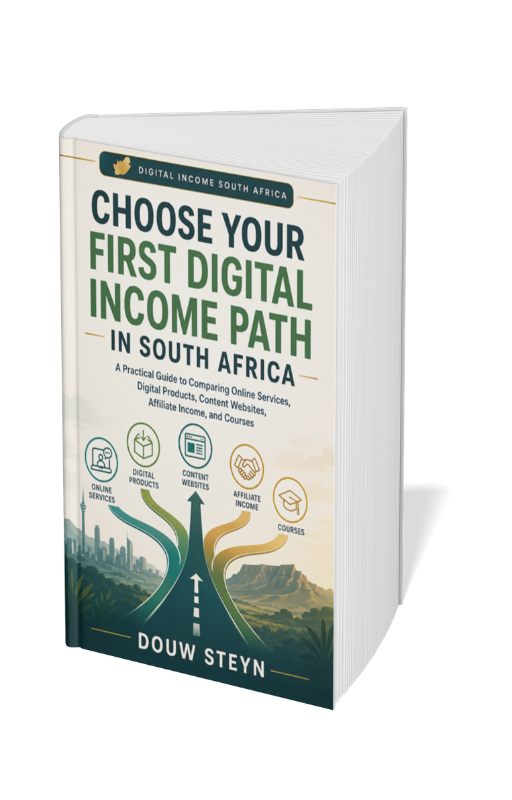
Choose Your First Digital Income Path in South Africa
Compare possible income paths against your skills, resources, available time and tolerance for risk.
View the guide
The Bootstrap Mindset for Digital Entrepreneurs
Learn to work with limited resources, test assumptions and avoid spending heavily before demand is proven.
View the guide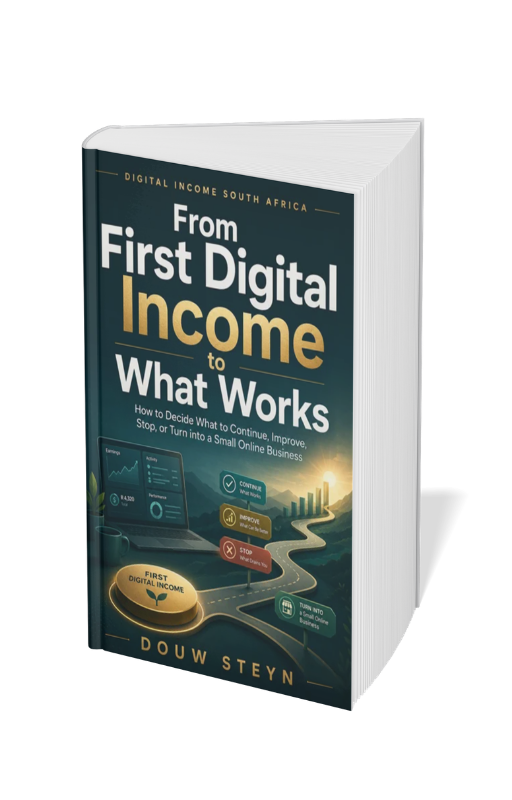
From First Digital Income to What Works
Turn the first enquiry, sale or encouraging response into evidence for a more repeatable income system.
View the guide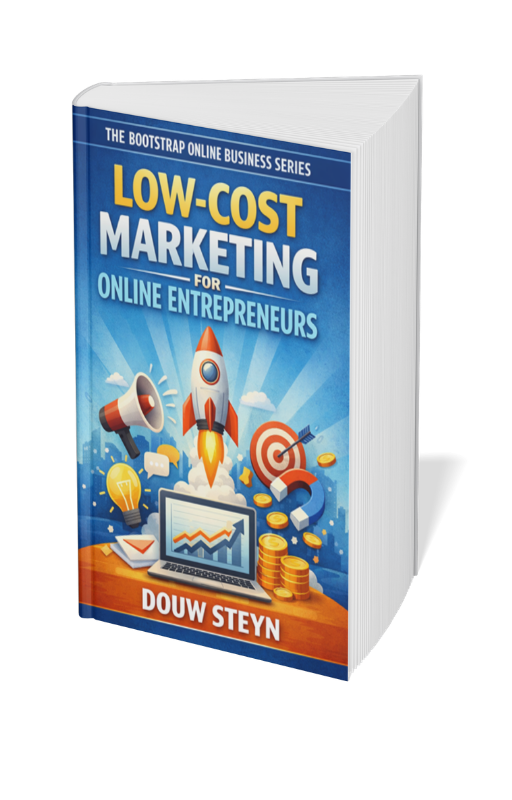
Low-Cost Marketing for Online Entrepreneurs
Promote a small offer using practical channels before committing money to large advertising campaigns.
View the guide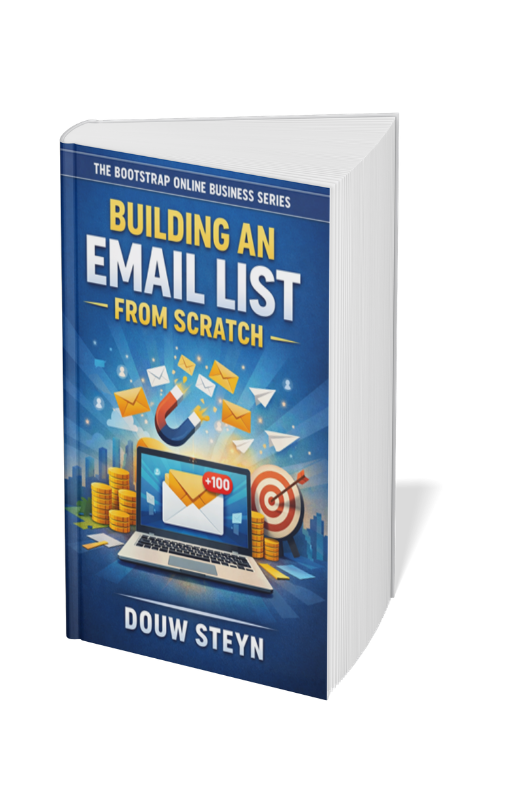
Building an Email List from Scratch
Create a direct communication channel with prospects instead of depending entirely on social-media reach.
View the guide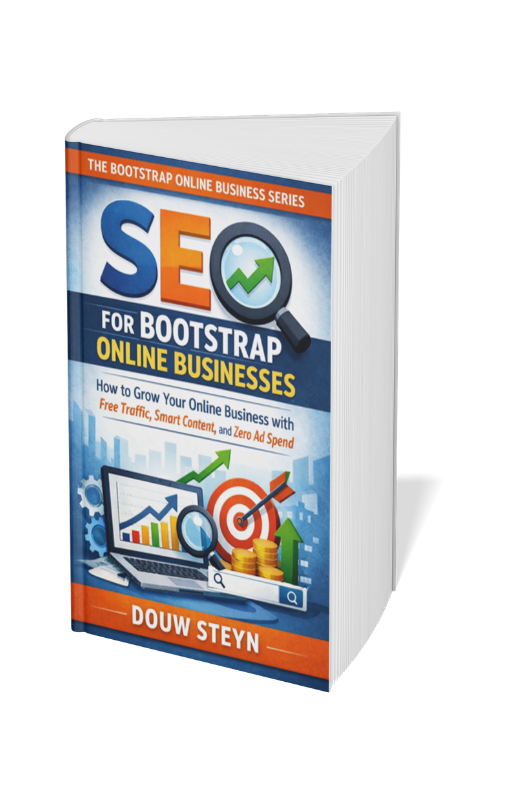
SEO for Bootstrap Online Businesses
Build search visibility methodically when your budget does not allow you to buy every visit through advertising.
View the guide
How to Open a Web Development Agency Online
Explore how website skills can be packaged into a focused service for small and growing businesses.
View the guide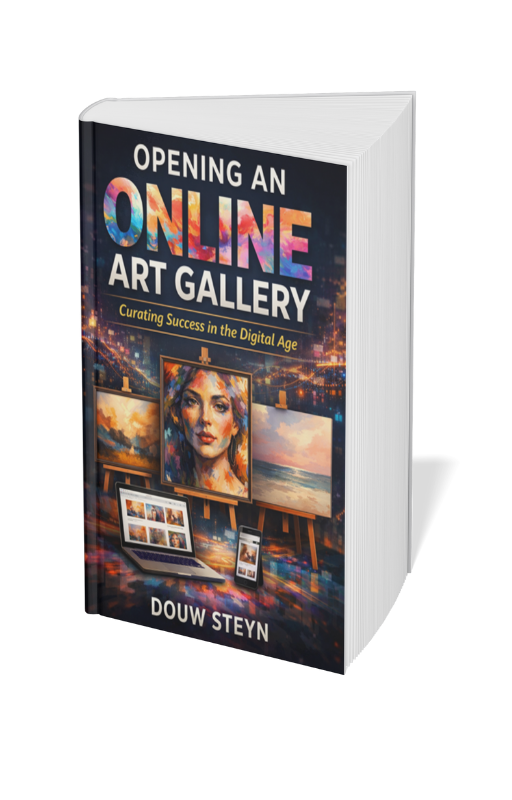
Opening an Online Art Gallery
Learn how art can be presented, marketed and sold through a structured online-gallery business.
View the guide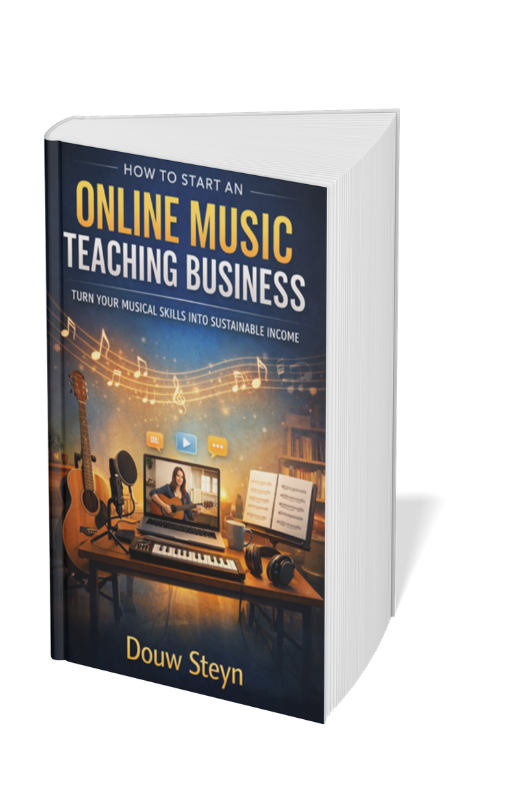
How to Start an Online Music Teaching Business
Package musical knowledge into online lessons, programmes and customer relationships.
View the guideRecommended next steps
Frequently asked questions
Can I really earn online without getting a remote job?
Yes, it is possible to earn by providing freelance services, teaching, assisting small businesses, selling products or completing projects. However, there is no guarantee of income. You must still identify a customer, communicate a useful offer and deliver the promised result.
What is the quickest way to start earning online?
For many beginners, the quickest option to test is a small service based on an existing skill. It usually requires less setup than building a store, audience, course or affiliate website. Finding a paying customer can still take time.
Can I start with only a smartphone?
Some activities can be started with a smartphone, including communication, simple Canva work, social-media support, WhatsApp catalogues, tutoring and local selling. More complex writing, spreadsheet, website and editing work is generally easier with a computer.
Do I need to register a company first?
Not every small test requires a private company. South Africans can operate in different business forms, including as sole proprietors. The correct structure depends on the nature, risk and scale of the activity. Obtain professional guidance where necessary.
Should I stop applying for remote jobs?
Not necessarily. You can continue applying for suitable remote jobs while testing a small independent income offer. The two paths can support each other: freelance work may also provide experience, references and proof for future job applications.
Is passive income a good solution when money is urgent?
Usually not. Most so-called passive-income models require substantial initial work, audience building, customer acquisition or capital. When income is urgent, a direct service using an existing skill is generally more practical to test.
How do I know whether an online opportunity is a scam?
Be suspicious when the opportunity promises unusually high income for little effort, contacts you unexpectedly, requests personal financial information too early or requires a payment or cryptocurrency deposit before you can work or withdraw earnings.
The final message
Failing to secure a remote job does not mean you have failed at earning online. It means one particular route has not yet produced the result you need.
You can continue improving your remote-job applications. At the same time, you can test whether a small customer will pay you to format a document, organise information, teach a lesson, create graphics, update a website, set up a catalogue or solve another practical problem.
Do not begin with the question, “How can I make a lot of money online?”
Begin with: “What useful result can I deliver for one real person using the skills and resources I already have?”
That question is less exciting than an easy-money promise. It is also much more likely to lead to evidence, experience and a genuine first step.