
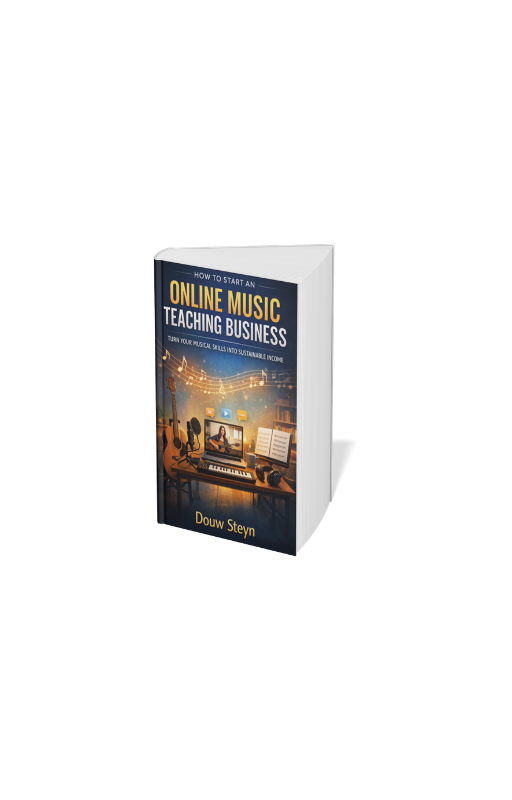
Turn Your Musical Skills Into a Structured Online Teaching Business
Musical talent can create more than performance opportunities. It can also serve as the foundation for a flexible, professional, and sustainable online teaching business.
How to Start an Online Music Teaching Business is a practical step-by-step guide for musicians, music teachers, composers, performers, and creative professionals who want to earn income by teaching students online.
The book is written for people who know music but may feel uncertain about the business side of teaching online. You may already teach a few students informally, work as a school or private music teacher, perform professionally, compose or arrange music, or have years of musical knowledge that could help others.
This guide shows you how to turn that knowledge into a clear teaching offer, attract suitable students, set sustainable prices and build systems that support long-term income.
You do not need an expensive recording studio, a large social media following or advanced technical knowledge to begin. You need a practical plan, a clear understanding of the students you want to help and the willingness to start with the resources you already have.
Online Music Teaching Is More Than Video Calls
Many people assume that teaching music online simply means moving a traditional lesson onto Zoom or another video platform. Live one-on-one lessons are certainly one option, but they are only the beginning.
An online music teaching business can include:
- Private one-on-one music lessons
- Small online group classes
- Beginner music programmes
- Exam preparation
- Songwriting and composition coaching
- Music theory lessons
- Voice coaching
- Instrument-specific training
- Music production and software lessons
- Pre-recorded courses
- Downloadable practice resources
- Monthly memberships
- Hybrid programmes combining live and recorded learning
This creates opportunities to earn from more than teaching hours alone. Your knowledge can be organised into lessons, courses, worksheets, practice plans and membership resources that continue serving students without requiring you to repeat the same explanations every day.
Who This Book Is For
This guide is suitable for musicians and teachers at different stages of their careers.
It is particularly useful for:
- Music teachers who want to move some or all of their lessons online
- Musicians who want to create an additional income stream
- Composers, arrangers and music directors who can teach specialised skills
- Working musicians looking for more predictable income
- Retired musicians who want flexible, meaningful work
- University music students who want to earn around their studies
- Church musicians who can teach worship, gospel or choir-related skills
- Self-taught musicians with strong practical experience
- Teachers who want to reach students beyond their local area
- South Africans who want to earn from local and international students
You do not need to be a famous performer or an elite concert musician. Students are not only paying to hear you play. They are paying for your ability to explain, guide, encourage and help them improve.
If you can break musical concepts into clear steps and support someone through the learning process, you already have an important part of what is needed.
Choose the Right Online Music Teaching Niche
Trying to teach every instrument, age group, and skill level usually makes marketing more difficult. Students respond more confidently when they immediately understand who you help and what you teach.
This book explains how to choose a focused teaching niche based on your skills, experience, and preferred students.
Possible niches include:
- Beginner piano lessons for adults
- Online guitar lessons for children
- Worship guitar coaching
- Voice coaching for nervous beginners
- Music theory for instrumentalists
- Exam preparation for school learners
- Songwriting and composition lessons
- Choir training and vocal arrangement
- Jazz improvisation
- Classical instrument tuition
- African music and rhythm instruction
- Home recording and music production
- Digital audio workstation training
- Transcription and arranging skills
You will learn how to combine an instrument, student type, level, genre, or outcome to create a clear position in the market.
A focused niche does not permanently limit your business. It gives you a strong starting point. Once you have established your reputation and systems, you can expand your services with greater confidence.
Create a Teaching Offer Students Can Understand
A student should be able to quickly understand what you teach, how the lessons work, what they will learn, and how much it costs.
The book guides you through the process of creating a clear teaching offer, including:
- Choosing between one-on-one and group lessons
- Deciding on 30-minute, 45-minute or 60-minute sessions
- Creating lesson packages
- Developing structured beginner programmes
- Combining live lessons with recorded resources
- Creating progression paths and milestones
- Setting expectations before the first lesson
- Writing cancellation and rescheduling policies
- Creating a consistent student experience
Instead of delivering disconnected lessons from week to week, you will learn how to guide students through a clear learning journey.
This helps students recognise their progress, remain motivated and continue learning for longer.
Price Your Music Lessons Sustainably
Pricing is one of the most difficult decisions for many musicians. Creative professionals often undercharge because they are unsure what the market will accept or feel uncomfortable asking for money.
However, unsustainable pricing eventually leads to frustration, exhaustion, and inconsistent service.
This book explains practical pricing approaches for:
- Individual lessons
- Lesson packages
- Monthly subscriptions
- Group programmes
- Recorded courses
- Hybrid teaching packages
- Local students paying in rand
- International students paying in foreign currencies
You will learn why pricing should reflect the value of the learning experience rather than only the number of minutes spent on a call.
The guide also explains how packages and subscriptions can improve cash flow, encourage student commitment and reduce the financial impact of cancellations.
Start With the Equipment You Already Have
You do not need a professional recording studio to teach music online.
A basic setup may include:
- A laptop, tablet or suitable smartphone
- A stable internet connection
- A basic microphone
- A webcam or phone camera
- Simple lighting
- Your instrument and teaching materials
- A quiet and tidy teaching space
The book helps you identify the minimum setup needed to begin and shows you how to improve your equipment gradually as your income grows.
You will also learn about sound quality, camera positioning, internet backups, load-shedding preparation and practical ways to create a professional lesson environment without overspending.
Choose Suitable Teaching, Booking and Payment Platforms
Technology should make teaching easier, not create unnecessary complications.
This guide helps you evaluate the tools needed for:
- Video lessons
- Student scheduling
- Online bookings
- Payments
- File sharing
- Lesson recordings
- Course delivery
- Email communication
- Student progress tracking
You will learn how to choose tools based on reliability, affordability, and ease of use rather than selecting platforms simply because they are popular.
The aim is to build a simple system that students can understand and that you can manage consistently.
Create Effective Online Music Lessons
Online lessons require more structure than informal face-to-face teaching. Students need clear explanations, visible demonstrations, focused exercises, and specific practice instructions.
The book explains how to structure lessons around:
- A clear lesson objective
- A brief student check-in
- Review of previous practice
- Focused teaching
- Guided practice
- Correction and feedback
- Homework or next steps
- Progress tracking
You will learn how to keep online students engaged, how to explain musical concepts through a screen, and how to use digital resources to strengthen the learning experience.
The guide also considers the different needs of children, adults, beginners, intermediate students, and advanced learners.
Build a Professional Online Music Teacher Brand
Your online presence helps students decide whether they trust you before they ever attend a lesson.
You do not need complicated branding, but you do need clarity and consistency.
The book shows you how to develop:
- A clear teacher profile
- A professional biography
- A focused teaching message
- A simple website or landing page
- A suitable profile photograph
- Clear descriptions of your lessons
- Student testimonials
- Introductory videos
- Social media content that demonstrates your teaching ability
Students want to know who you teach, how you teach, what outcomes you help them achieve, and whether they will feel comfortable learning from you.
A professional brand communicates these answers clearly.
Attract Your First Students
A good teaching offer cannot succeed if nobody knows it exists.
This guide provides practical marketing methods for music teachers who do not have large advertising budgets.
You will learn how to use:
- Word-of-mouth referrals
- Local community groups
- Social media
- Short educational videos
- Email communication
- Music organisations and schools
- Church and community networks
- Online teaching directories
- Your own website
- Student testimonials and success stories
The focus is not on aggressive selling. It is on demonstrating your teaching ability, answering the questions potential students already have, and making it easy for the right people to contact you.
Teach Students in South Africa and Internationally
Online music teaching removes geographic restrictions.
A teacher in Johannesburg, Pretoria, Cape Town, Durban or a smaller South African town can teach students anywhere with a reliable internet connection.
This creates opportunities to serve:
- Students in other South African provinces
- South Africans living abroad
- International adult learners
- Children whose parents want specialised instruction
- Students seeking African music expertise
- Musicians looking for niche coaching
The book explains practical considerations such as time zones, foreign currency pricing, payment options, communication expectations, and scheduling.
International teaching may offer stronger earning potential, but it also requires professional systems and dependable service. The guide helps you approach this opportunity realistically.
Keep Students Longer and Build Recurring Income
Finding a new student is valuable. Keeping a suitable student for several months or years is even more valuable.
Student retention improves when learners experience progress, encouragement, and consistency.
This book explains how to strengthen retention through:
- Clear learning goals
- Visible progress milestones
- Regular feedback
- Structured practice plans
- Professional communication
- Reliable scheduling
- Appropriate challenges
- Recognition of student achievements
- Renewal and follow-up systems
A strong student experience creates recurring income, referrals, and a positive professional reputation.
Scale Beyond One-on-One Lessons
Private lessons can provide a reliable starting income, but your available time will always be limited.
The book explores ways to grow beyond selling individual teaching hours.
These options include:
- Small group classes
- Workshops
- Beginner programmes
- Recorded courses
- Downloadable lesson materials
- Practice guides
- Membership communities
- Teacher resources
- Student subscriptions
- Licensing educational content
- Training additional teachers
You do not need to implement every model. The guide helps you identify which growth options fit your skills, energy, audience and long-term goals.
Understand the Business and Administrative Basics
Teaching music online is creative work, but it is also a business activity.
The guide introduces essential administrative considerations, including:
- Operating as a freelancer
- Registering a business when appropriate
- Keeping income and expense records
- Issuing invoices
- Managing taxes
- Understanding VAT considerations
- Creating payment terms
- Writing cancellation policies
- Protecting lesson materials
- Teaching minors responsibly
- Obtaining parental consent where necessary
- Creating simple terms of service
The information is presented in practical language to help first-time entrepreneurs understand what requires attention.
The book does not replace professional legal, tax or accounting advice, but it will help you identify the questions you may need to discuss with a qualified adviser.
A Practical Guide With South African Relevance
Much of the information available about online teaching is written for markets with different income levels, currencies, payment systems and business conditions.
This book includes a strong South African perspective while remaining useful to readers in other countries.
It considers:
- Pricing in rand
- Local affordability
- International earning opportunities
- South African business realities
- Internet reliability
- Load shedding and backup planning
- VAT considerations
- Local and international payment options
- The value of earning in stronger currencies
The advice remains practical and realistic. It does not promise instant success or passive income without effort.
What You Will Learn
By working through this book, you will learn how to:
- Assess whether online music teaching is right for you
- Identify the students you are best equipped to teach
- Choose a clear and marketable music teaching niche
- Design one-on-one, group, or hybrid lessons
- Create a beginner-friendly student journey
- Set lesson prices and package options
- Teach local and international students
- Select affordable equipment and online tools
- Create structured and professional lessons
- Build a trustworthy online presence
- Market your teaching services
- Attract and convert your first students
- Improve student retention
- Develop recurring income
- Create digital courses and teaching resources
- Scale beyond hourly teaching
- Avoid common startup mistakes
- Set realistic income and growth expectations
Build a Business That Supports Your Musical Work
An online music teaching business does not have to replace your performing, composing, arranging, or other creative work.
It can support it.
Reliable teaching income can reduce financial pressure, allow you to work from home, give you more control over your schedule and help you share your musical knowledge with students who may never have found you locally.
The goal is not to chase unrealistic promises or build a complicated education company overnight.
The goal is to start with one clear offer, serve a small number of students well, and improve your systems as you gain experience.
How to Start an Online Music Teaching Business gives you the practical structure needed to take that first step.
Start Small, Teach Well and Build What Works
Your musical experience already has value. The next step is learning how to package, present, and deliver that value in a way that students understand and are willing to pay for.
This guide will help you move from uncertainty to action by showing you how to build an online music teaching business carefully, professionally and sustainably.
Get your copy today and begin turning your musical skills into a flexible online income opportunity.



Reviews
There are no reviews yet.